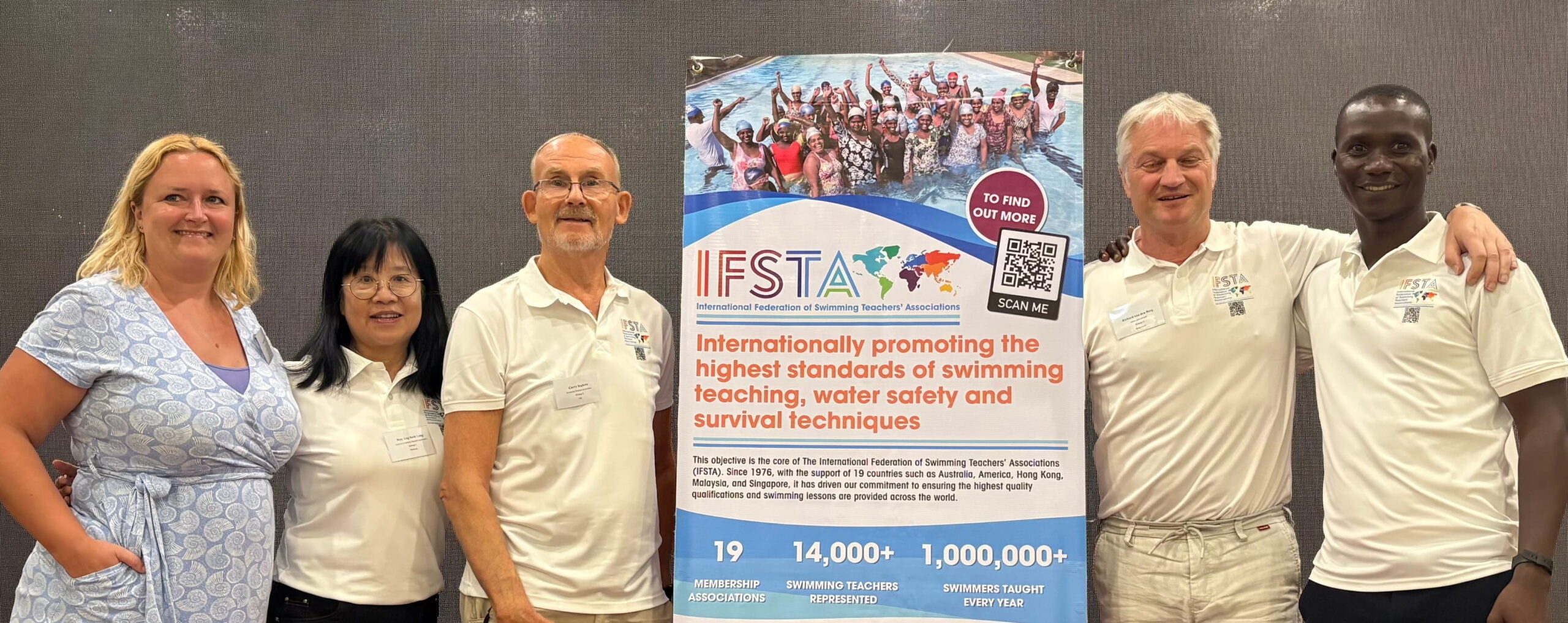
This week, professionals from different countries gathered in Vietnam for a unique conference focused on swimming education, water safety and international collaboration. Four IFSTA members from Vietnam, Uganda, Malaysia and the Netherlands were also involved.
The conference was organised by the RNLI, Royal Life Saving Society, Commonwealth Drowning Prevention and the Vietnamese organisation Hue Help.
The conference combined presentations, practical workshops and site visits, creating an environment where ideas, challenges and solutions could be shared openly between countries with very different realities.
From conference room to practice
One of the strongest aspects of this week was the balance between theory and practice. While mornings often focused on presentations and discussions, the afternoons allowed participants to visit local facilities and experience how swimming education is organised in Vietnam.
We visited a local swimming pool outside Hué, where discussions focused not only on teaching methods, but also on practical safety considerations that are very different from those in Europe. Topics ranged from water quality and environmental risks to keeping animals out of pool areas in tropical conditions.
One interesting discussion focused on how even very small details can become important safety risks in tropical environments. For example, equipment with small openings may unintentionally attract small animals or insects. Situations like these demonstrate how swimming education and pool management must always adapt to local circumstances.
Later in the week, participants observed swimming lessons in the sea along the Vietnamese coastline. It was impressive to see how local instructors organise lessons in open water conditions. Safety systems using floating lane lines and protective nets against jellyfish demonstrated how swimming education adapts to nature itself.
The instructors also explained how they continuously inspect the seabed before lessons begin to remove sharp objects, glass or other dangerous materials that may have washed ashore.
Sharing knowledge across cultures
The conference highlighted how strongly culture influences teaching methods, communication and safeguarding practices.
One of the most valuable sessions focused on safeguarding in swimming education – or, more practically translated, child-safe working practices in aquatic environments. Discussions explored how different countries approach physical guidance, supervision and instructor behaviour.
It became clear that many aspects of teaching are strongly culture-based. Something considered normal in one country may be viewed completely differently somewhere else. These conversations created valuable awareness and opened the door for future educational developments within IFSTA and its member organisations.
The impact of the 3-Minute Floating Challenge
One of the most inspiring moments of the conference was the introduction of the 3-Minute Floating Challenge.
What makes the concept powerful is its simplicity. No complicated rulebooks, no extensive theory sessions and no barriers to participation; just a clear and accessible challenge that allows participants to experience success very quickly.
The response from delegates was overwhelmingly positive. Participants from several countries, including Kenya, Mozambique, Vietnam, Cambodia and South Africa, showed strong interest in implementing the challenge within their own organisations and communities.
The challenge demonstrated that effective water safety education does not always need to be complicated. Sometimes simplicity creates the greatest impact.
The concept also created many informal conversations outside the sessions themselves. Several delegates requested additional information and showed interest in further collaboration with IFSTA in the future.
More than a conference
Beyond the workshops and presentations, the week in Vietnam was also about connection.
Professionals from different cultures and backgrounds shared experiences, meals, ideas and ambitions for the future of aquatic education. Visiting local locations together created conversations that would never happen inside a conference room alone.
The atmosphere throughout the week was open, practical and collaborative. Although circumstances differ greatly between countries, the shared goal remained the same everywhere: creating safer environments in and around water and helping more people develop confidence in aquatic settings.
The conference in Vietnam showed once again that international cooperation remains one of the strongest tools for innovation, inspiration and progress within swimming education and water safety worldwide.